Crochet Placemats: A Flat Moss Stitch Set of Four
Make a set of four 12 x 18 in cotton placemats in moss stitch, a dense, level fabric that keeps plates and glasses steady. Includes edging, yardage per mat and washing notes.
Project at a glance
Materials
- About 520 yd (475 m) worsted-weight 100% cotton for four mats
- H-8 (5 mm) crochet hook
- Yarn needle
- Scissors and tape measure
- Blocking mat and rust-proof pins
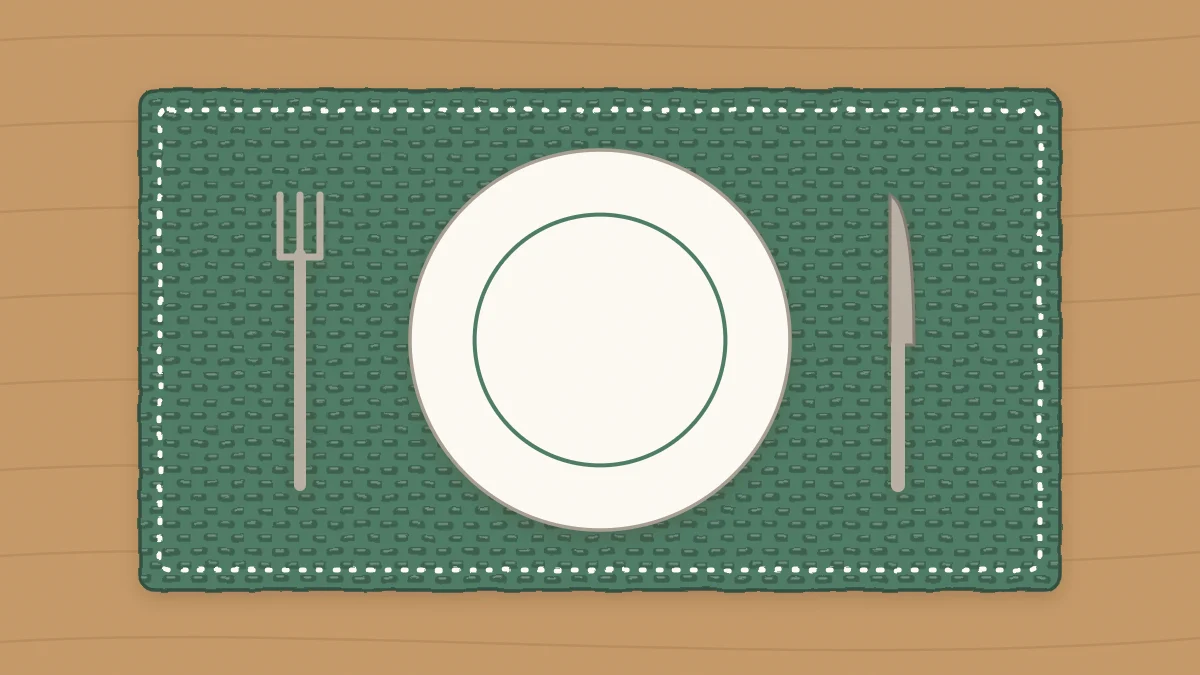
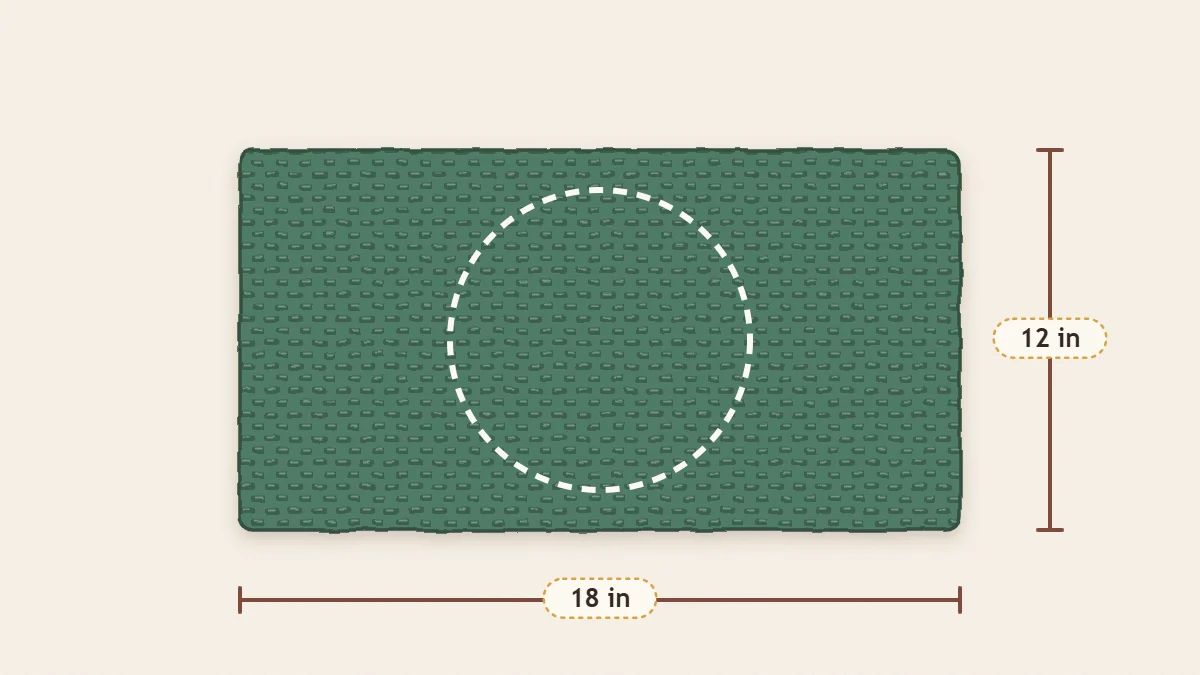
Good crochet placemats have one job that most patterns overlook: they must be flat enough for a plate and a glass to sit level. This set of four 12 x 18 in (30 x 46 cm) mats uses moss stitch in worsted cotton, a dense fabric with no ridges or bumps, finished with a single round of edging.
Why moss stitch works for placemats
Moss stitch alternates one single crochet with one chain, and each new stitch sits in the chain space below. The result is a thin, tightly woven fabric that looks the same on both sides. There are no raised posts or bobbles to rock a glass, and the small gaps are too tight for a fork tine to catch in.
It is also a one-row repeat, so by the second mat you will not need the pattern. For a different look, the texture stitches for crochet home decor guide describes others, but keep the raised ones for pillows and stay with flat stitches at the table.
Materials and yardage
- Worsted-weight (#4) 100% cotton: roughly 120 to 140 yards (110 to 128 m) per mat, or about 520 yards (475 m) for four
- H-8 (5 mm) crochet hook
- Yarn needle and scissors
- Tape measure
- Blocking mat and rust-proof pins
Cotton absorbs spills, handles warm plates and can be washed often. Choose a smooth, tightly plied cotton over a soft, loosely spun one: it pills less and keeps crisp edges. Buy the yarn for the whole set at once so all four mats match.
Gauge and finished size
Gauge: 16 sts and 16 rows = 4 in (10 cm) in moss stitch, counting every sc and every ch-1 sp as one stitch. That is 4 stitches and 4 rows per inch.
The body is 70 stitches wide (70 ÷ 4 = 17.5 in) and 46 rows tall (46 ÷ 4 = 11.5 in). The edging adds about 0.25 in (6 mm) to each side, giving a finished mat of 12 x 18 in. A standard dinner plate of 10 to 11 in fits with room at the sides for cutlery.
Work a swatch on a chain of 22 for 20 rows and measure the center. If your mat is coming out small, go up a hook size before you change the stitch count.
Stitch abbreviations (US terms)
- ch: chain
- sc: single crochet
- sk: skip
- sp: space
- st/sts: stitch/stitches
- sl st: slip stitch
- rep: repeat
Crochet placemat pattern
Make four. The turning ch 2 counts as one stitch at the edge.
- Foundation: Ch 72.
- Row 1: Sc in the 4th ch from the hook. *Ch 1, sk 1 ch, sc in the next ch; rep from * to the end. (35 sc and 34 ch-1 sps)
- Row 2: Ch 2, turn. Sc in the first ch-1 sp. *Ch 1, sc in the next ch-1 sp; rep from * across, working the last sc into the sp made by the turning chain. (35 sc and 34 ch-1 sps)
- Rows 3 to 46: Rep Row 2. The piece should measure about 17.5 x 11.5 in (44 x 29 cm). Do not fasten off.
- Edging, top: Ch 1, turn. Work 70 sc across the last row: 1 sc in each sc and each ch-1 sp, and 1 in the turning-chain sp. Ch 2 for the corner.
- Edging, sides and base: Rotate and work 46 sc down the side, 1 in each row end, then ch 2. Work 70 sc along the foundation chain, ch 2. Work 46 sc up the second side, ch 2.
- Finish: Sl st to the first sc and fasten off. (232 sc and 4 ch-2 corner sps)
Tip
Every row must end with a sc in the turning-chain space. Skipping it loses a stitch each row and the mat narrows into a wedge. If the edge looks uneven, count: 35 sc in every row.
Other sizes
Any even number of chains works. Each extra pair of chains adds half an inch of width, and every 4 rows add an inch of height.
| Finished size | Foundation chain | Rows | Yarn per mat (approx.) |
|---|---|---|---|
| 12 x 18 in (30 x 46 cm) | 72 | 46 | 130 yd (119 m) |
| 13 x 19 in (33 x 48 cm) | 76 | 50 | 150 yd (137 m) |
| 14 x 20 in (36 x 51 cm) | 80 | 54 | 170 yd (155 m) |
For the edging on a different size, work 1 sc per stitch along the top and base and 1 sc per row end on the sides.
Finishing and care
Weave each tail through the back of the stitches for about 2 in (5 cm), then reverse direction for a few stitches. Placemats are washed constantly, and a tail that is only run one way will work loose.
Block all four mats to the same measurements so the set matches. Wet them, press out the water in a towel, pin each one to 12 x 18 in with square corners, and let them dry flat. The details are in finishing crochet home decor.
Washing and everyday use
Cotton can generally be machine washed, but follow your yarn label and wash dark or bright colors separately the first few times, since cotton dyes can bleed. Reshape the mats while damp and dry them flat. Expect them to soften with washing and to shrink slightly on the first wash, which tightens the fabric.
Watch out
A single-layer placemat is not a trivet. It handles a warm dinner plate, but a pot or dish straight from the oven needs a proper hot pad underneath.
To finish the table, the same cotton works for a crochet table runner down the center and a set of easy crochet coasters for the glasses.
Frequently asked questions
Can I make the placemats in two colors?
Yes, and moss stitch is well suited to it. Changing color every row or every two rows produces a woven, speckled effect because each stitch dips into the row below. Carry the unused color loosely up the side and the edging will cover it.
Why do the corners of my placemat curl?
Curling corners usually come from a tight foundation chain or tight edging. Work the chain with a hook one size larger, keep the corner chains loose, and block the finished mat with pins at each corner.
Is acrylic yarn suitable for placemats?
Cotton is the better choice at the table. It absorbs spills and copes with the warmth of a dinner plate, whereas acrylic does not absorb liquid and can be damaged by high heat.