6 Texture Stitches for Crochet Home Decor (With Stitch Multiples)
Six textured crochet stitches with written rows and stitch multiples: moss, waffle, bobble, basketweave, lemon peel and front-post ribbing, plus where each works best around the home.
Project at a glance
Materials
- Smooth solid-colored #4 worsted yarn
- H-8 (5 mm) hook
- Yarn needle
- Scissors
- Tape measure
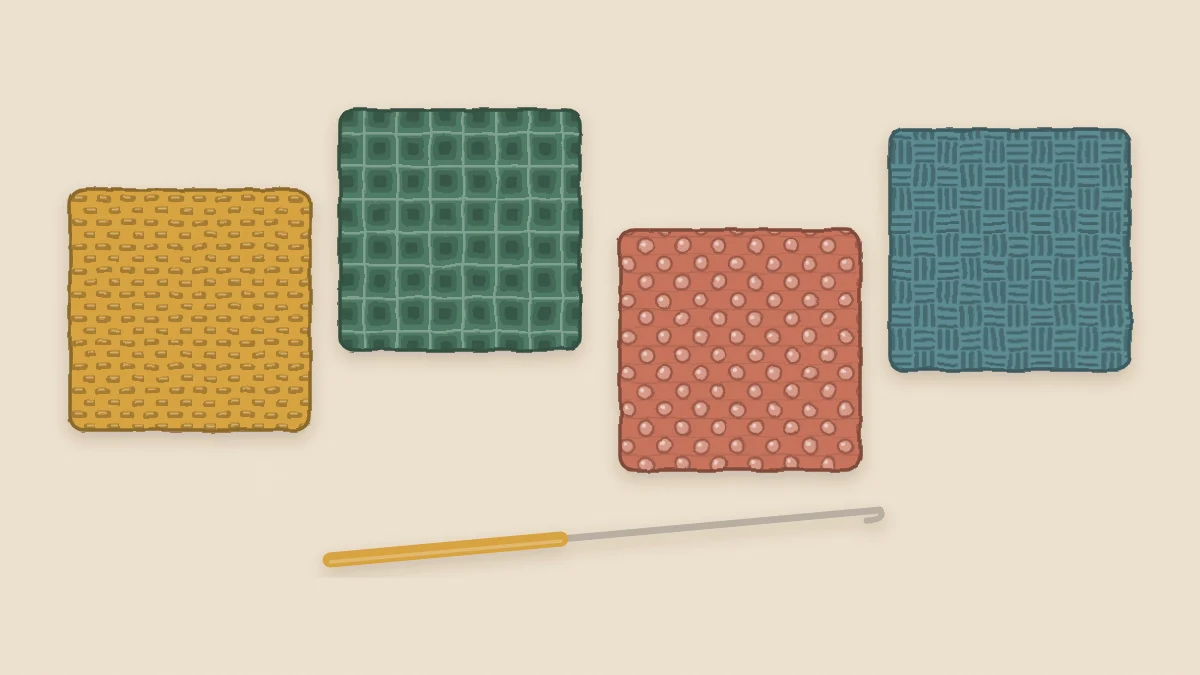
The right texture stitches for crochet home decor turn a plain square into a pillow, cloth or basket that looks deliberate. The six below use only chains, sc and dc, yet each produces a very different surface. Every one comes with its stitch multiple, written rows in US terms and the projects it suits best.
Tip
Two post stitches appear below. FPdc: yarn over, insert the hook from front to back to front around the post of the stitch below, and complete a dc. BPdc: the same, inserting the hook from back to front to back. Other abbreviations: ch = chain, sc = single crochet, dc = double crochet, st = stitch, sk = skip, sp = space, rep = repeat, RS/WS = right/wrong side.
Moss (Linen) Stitch
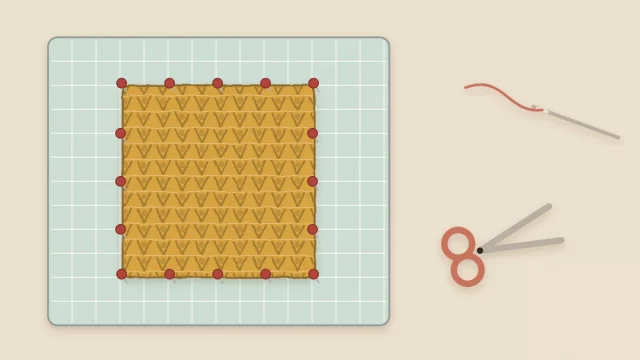
A flat, woven-looking fabric of sc and ch-1 spaces. It lies level, has no holes to speak of and looks the same on both sides, so it is ideal for placemats, dishcloths and pillow covers. Multiple: chain an even number.
- Row 1: Sc in 4th ch from hook, *ch 1, sk 1 ch, sc in next ch; rep from * across.
- Row 2: Ch 2, turn, sc in first ch-1 sp, *ch 1, sc in next ch-1 sp; rep from * across, working the last sc in the sp made by the turning ch.
Repeat Row 2. You always work into spaces, never into stitches, which makes this a relaxing stitch to learn.
Waffle Stitch
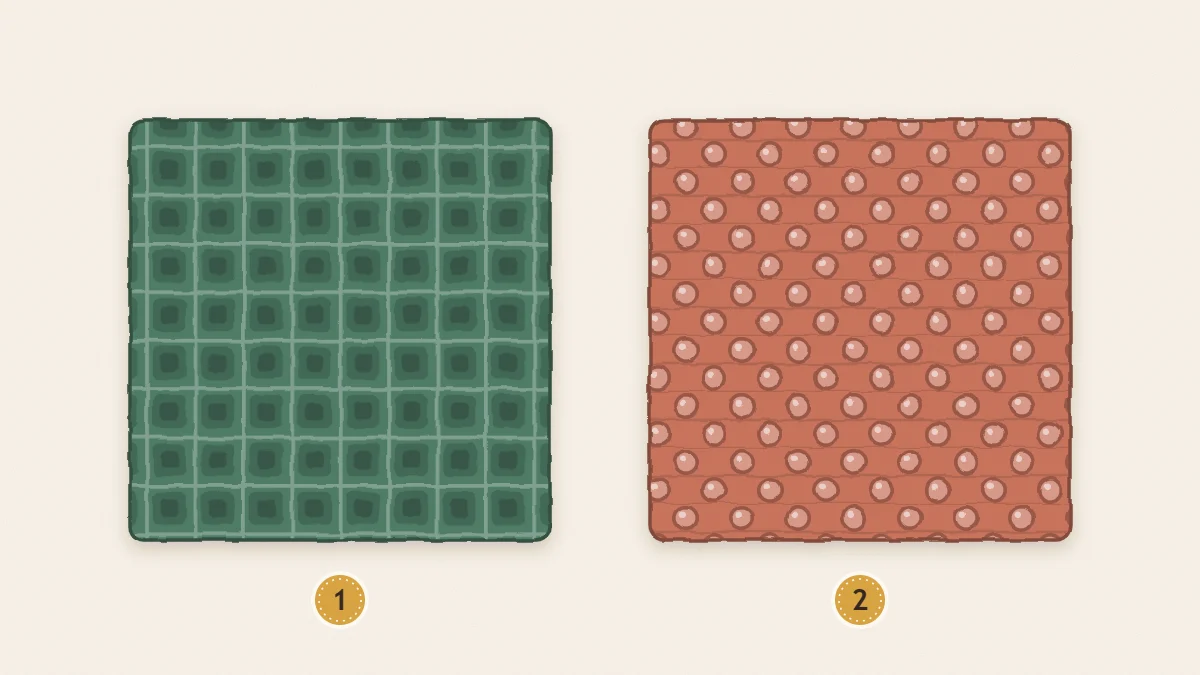
A deep grid of raised squares made with post stitches. It is thick and cushioned, and it uses noticeably more yarn than plain dc. Use it for hot pads in cotton, cushions and throws. Multiple: chain a multiple of 3 plus 1, which gives a stitch count that is a multiple of 3 plus 2.
- Row 1 (WS): Dc in 4th ch from hook (skipped chs count as a dc) and in each ch across.
- Row 2 (RS): Ch 3 (counts as dc here and throughout), turn, *FPdc around next st, dc in next 2 sts; rep from * to last st, dc in top of turning ch.
- Row 3: Ch 3, turn, *FPdc around each of next 2 sts, dc in next st; rep from * to last st, dc in top of turning ch.
Repeat Rows 2 and 3. As a check, a chain of 16 gives 14 stitches: one edge stitch, four repeats of three, and one edge stitch.
Bobble Stitch
Rounded bumps on a plain sc ground. Bobbles are made on WS rows and pop out on the RS. They suit pillow fronts and wall hangings, but not surfaces that need to be level, such as coasters. Multiple: chain a multiple of 4, for a stitch count that is a multiple of 4 plus 3.
Bobble: (yarn over, insert hook in st, pull up a loop, yarn over, pull through 2 loops) 5 times in the same st, yarn over and pull through all 6 loops on the hook.
- Row 1 (RS): Sc in 2nd ch from hook and in each ch across.
- Row 2 (WS): Ch 1, turn, sc in first 3 sts, *bobble in next st, sc in next 3 sts; rep from * across.
- Row 3: Ch 1, turn, sc in each st across.
- Row 4: Ch 1, turn, sc in first st, bobble in next st, *sc in next 3 sts, bobble in next st; rep from * to last st, sc in last st.
- Row 5: Rep Row 3.
Repeat Rows 2 to 5 for staggered bobbles. A chain of 20 gives 19 sc, with four bobbles in Row 2 and five in Row 4.
Basketweave Stitch
Blocks of front-post and back-post stitches that appear to pass over and under each other. The fabric is dense, warm and reversible, which is good for throws, bed runners and sturdy cushion covers. Multiple: chain a multiple of 8 plus 4, for a stitch count that is a multiple of 8 plus 2.
- Row 1: Dc in 4th ch from hook (skipped chs count as a dc) and in each ch across.
- Rows 2 to 4: Ch 3, turn, *FPdc around each of next 4 sts, BPdc around each of next 4 sts; rep from * to last st, dc in top of turning ch.
- Rows 5 to 7: Ch 3, turn, *BPdc around each of next 4 sts, FPdc around each of next 4 sts; rep from * to last st, dc in top of turning ch.
Repeat Rows 2 to 7. Because each repeat ends with the opposite kind of post stitch, the wording stays the same on RS and WS rows within a block.
Lemon Peel Stitch
Alternating sc and dc create a pebbled, slightly bumpy surface with no gaps. It is quick, reversible and absorbent in cotton, so it works for dishcloths, placemats and basket sides. Multiple: chain an odd number, for an even stitch count.
- Row 1: Sc in 2nd ch from hook, dc in next ch, *sc in next ch, dc in next ch; rep from * across.
- Row 2: Ch 1, turn, *sc in next dc, dc in next sc; rep from * across.
Repeat Row 2. Each row starts with a sc and ends with a dc, so short stitches always sit on tall ones.
Front-Post Ribbing
Vertical ridges with some stretch, made by alternating FPdc and BPdc. Use it for basket rims, the cuff of a jar cozy or a whole cushion front. Multiple: chain an even number, for an even stitch count.
- Row 1: Dc in 4th ch from hook (skipped chs count as a dc) and in each ch across.
- Row 2: Ch 3, turn, *FPdc around next st, BPdc around next st; rep from * to last st, dc in top of turning ch.
Repeat Row 2. On every row, work a FPdc around each stitch that stands forward and a BPdc around each that sits back.
Choosing a Stitch for Your Project
| Stitch | Fabric | Best for |
|---|---|---|
| Moss | Flat, dense, drapey | Placemats, cloths, pillow covers |
| Waffle | Thick, cushioned grid | Hot pads, cushions, throws |
| Bobble | Raised dots, one-sided | Pillow fronts, wall hangings |
| Basketweave | Dense, warm, reversible | Throws, bed runners |
| Lemon peel | Pebbled, gap-free | Dishcloths, basket sides |
| Front-post ribbing | Stretchy ridges | Rims, cuffs, cushion fronts |
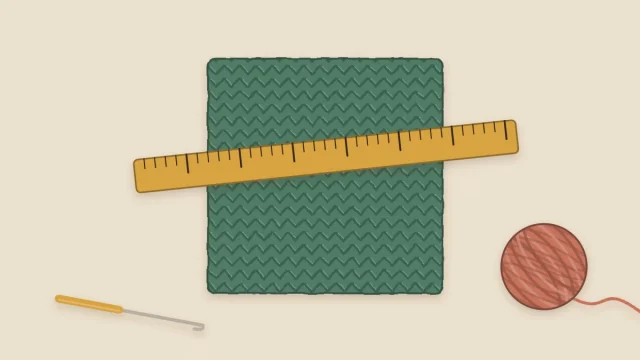
Textured stitches pull in differently from plain ones, so swatch before you size anything; the guide to sizing crochet home decor explains the math. Smooth, solid-colored yarn shows texture best, and the best yarn for crochet home decor guide helps you choose a fiber. To try a stitch on something useful, start with crochet dishcloths or a crochet throw pillow cover.
Frequently asked questions
Which texture stitch uses the most yarn?
Bobble, waffle and basketweave are the hungriest, because post stitches and clusters pack extra yarn into each stitch. Moss and lemon peel use about the same as plain rows. Buy extra yarn before starting a large piece in a heavily textured stitch.
Can these stitches be worked in the round?
Moss, lemon peel and front-post ribbing adapt easily to joined rounds on a tube such as a basket or jar cozy. Because you no longer turn, post stitches stay on the same side every round, so the instructions change slightly from the flat version.
Why does my textured swatch curl or pull in?
Post stitches draw the fabric together, so a tight foundation chain makes the bottom edge fan or curl. Work the chain with a hook one size larger, keep your post stitches relaxed and block the swatch before judging it.