Chunky Crochet Throw Blanket: An Easy Super Bulky Pattern
Make a dense, squishy 40 x 50 in throw in super bulky yarn and half double crochet, with a two-round border, an optional fringe and stitch counts for three sizes.
Project at a glance
Materials
- About 620 to 680 yd (567 to 622 m) super bulky (#6) yarn
- About 50 yd (46 m) extra for fringe
- M/N-13 (9 mm) crochet hook
- 4 stitch markers
- Large-eye yarn needle
- Scissors and tape measure
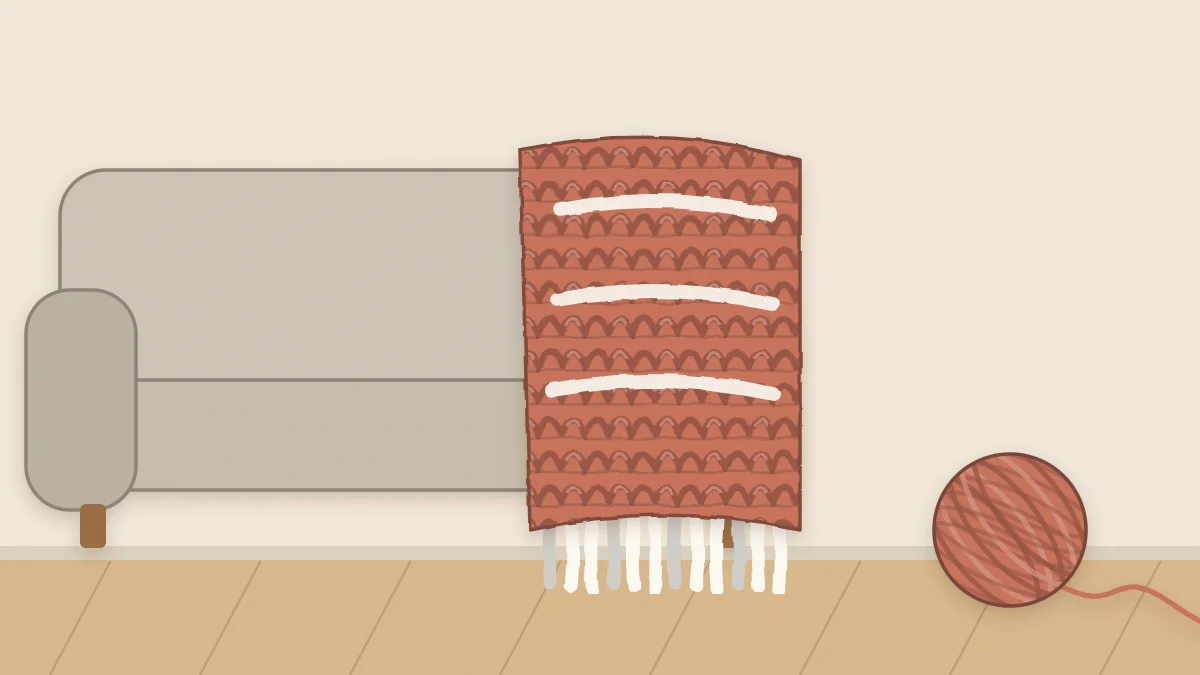
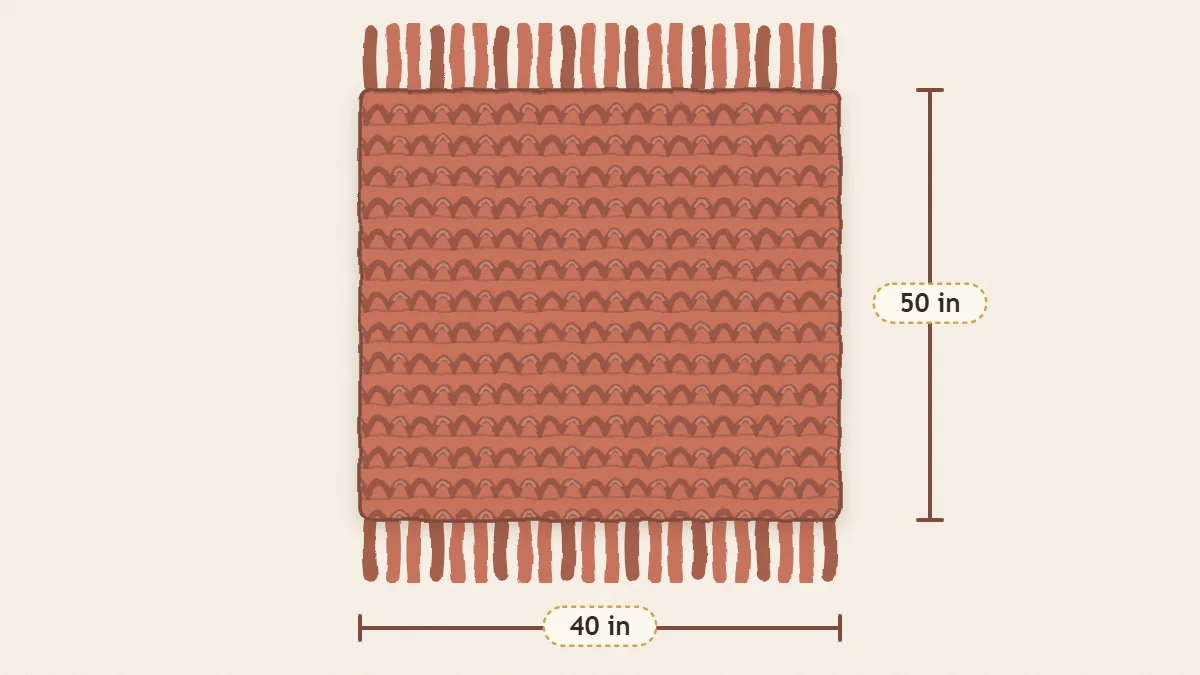
A chunky crochet throw blanket is one of the quickest large projects you can put on a hook: thick yarn, a big hook and a single easy stitch. This version uses super bulky (#6) yarn and half double crochet to build a dense, squishy throw of about 40 x 50 in (102 x 127 cm), finished with a tidy border and an optional fringe.
Yarn and materials
- Super bulky (#6) yarn: about 620 to 680 yards (567 to 622 m) for the body and border
- About 50 yards (46 m) extra if you add the fringe
- M/N-13 (9 mm) crochet hook
- Four stitch markers for the border corners
- Large-eye yarn needle, scissors and a tape measure
Skein sizes in this weight vary a lot, so work from yardage rather than a skein count. Divide the total by the yards on your label and round up: at 90 yards per skein, 650 yards comes to 8 skeins. Buy everything from the same dye lot, because a color shift across a plain blanket is hard to hide.
Acrylic and acrylic-wool blends give a light, soft throw that is easy to look after. Pure wool is warmer and noticeably heavier. If you are still choosing, the guide to the best yarn for crochet home decor compares the common fibers by use.
Size and gauge
Gauge: 8 hdc and 6 rows = 4 in (10 cm), which is 2 stitches and 1.5 rows per inch.
The body is 76 stitches wide (76 ÷ 2 = 38 in) and 72 rows long (72 ÷ 1.5 = 48 in). Two rounds of single crochet add about 1 in (2.5 cm) to every edge, which brings the finished throw to 40 x 50 in.
Gauge matters less for a blanket than for a fitted cover, but it decides how much yarn you use. Make a swatch of 12 stitches and 8 rows and measure the middle. If you get more than 8 stitches in 4 in, go up a hook size; if fewer, go down. The stitch-count method is explained in how to size crochet home decor.
| Finished size | Foundation chain | Stitches per row | Rows | Yarn (approx.) |
|---|---|---|---|---|
| 32 x 40 in (81 x 102 cm) lap throw | 62 | 60 | 57 | 420 yd (384 m) |
| 40 x 50 in (102 x 127 cm) throw | 78 | 76 | 72 | 650 yd (594 m) |
| 50 x 60 in (127 x 152 cm) large throw | 98 | 96 | 87 | 975 yd (892 m) |
Stitch abbreviations (US terms)
- ch: chain
- st/sts: stitch/stitches
- sc: single crochet
- hdc: half double crochet
- sl st: slip stitch
- sp: space
- RS: right side
Chunky throw pattern: the body
The turning chain does not count as a stitch anywhere in this pattern, which keeps the side edges straight.
- Foundation: Ch 78 loosely.
- Row 1 (RS): Hdc in the 3rd ch from the hook and in each ch across. (76 hdc)
- Row 2: Ch 2, turn. Hdc in the first st and in each st across, placing the last hdc in the final hdc of the row below, not in the turning chain. (76 hdc)
- Rows 3 to 72: Repeat Row 2. The body should measure about 38 x 48 in (97 x 122 cm). Do not fasten off.
Tip
Count your stitches at the end of every tenth row. Losing or gaining one stitch at the edge is the usual reason a blanket slowly turns into a trapezoid, and it is far easier to catch after ten rows than after fifty.
To join a new skein, stop at the end of a row and pull the new yarn through the last two loops of the final stitch. Joins at the edge disappear into the border. For a different surface, the same stitch count works with the moss stitch described in texture stitches for crochet home decor, although your row count will change, so measure as you go.
Border
A border evens out the row ends and gives thick yarn a finished frame.
- Round 1: Ch 1, turn. Sc in each of the 76 sts across the top, ch 2 for the corner. Rotate and work 96 sc evenly down the side, which is 4 sc for every 3 row ends, ch 2. Work 76 sc along the foundation chain, ch 2. Work 96 sc up the second side, ch 2. Sl st to the first sc. (344 sc and 4 ch-2 corner sps)
- Round 2: Ch 1, do not turn. Sc in each sc around, working (sc, ch 2, sc) in each ch-2 corner sp. Sl st to the first sc. (352 sc)
- Fasten off and weave in every tail for at least 4 in (10 cm), changing direction once so the slippery thick yarn cannot work loose.
If the side edges ripple, you have too many stitches there, so redo the side with slightly fewer. If they pull in, add a few.
Optional fringe
After Round 2, each short edge has 78 sc. Attaching a tassel in every other stitch gives 39 tassels per end.
- Cut 156 strands of yarn, each 12 in (30 cm) long. Wrapping the yarn around a 6 in (15 cm) piece of cardboard and cutting along one edge is quicker than measuring each one.
- Hold 2 strands together and fold them in half. Insert the hook from back to front through a border stitch, pull the folded loop through, then pull the four loose ends through the loop and tighten.
- Repeat in every other stitch across both short edges, then lay the throw flat and trim the fringe level at about 5 in (13 cm).
Weight and care
A super bulky throw is heavy for its size, commonly a few pounds, and that weight is part of the appeal on a sofa. It also means the fabric stretches if it hangs. Store the throw folded, not on a hook or hanger, and support it from underneath when it is wet.
Follow the care instructions on your yarn label, since fiber content decides everything. Many acrylic yarns can be machine washed on a gentle cycle, while wool usually needs a cool hand wash and flat drying. Wash a fringed blanket in a large mesh bag if you can, and comb the fringe straight with your fingers while it is damp.
Leftover yarn from the same dye lot is enough to start a matching crochet throw pillow cover for the other end of the sofa.
Frequently asked questions
Can I use two strands of bulky yarn instead of super bulky?
Often, yes. Two strands of bulky (#5) yarn held together usually land close to super bulky thickness, but the result varies by yarn. Make a gauge swatch first and expect to need roughly double the yardage, since you are using two strands at once.
Why is my blanket getting wider or narrower?
The stitch count is changing at the edges. In this pattern the turning chain is not a stitch, so the first hdc goes in the very first stitch and the last goes in the final hdc, never in the chain. Count 76 stitches every few rows until the edge becomes familiar.
Should I block a chunky throw?
A plain hdc blanket in thick yarn rarely needs formal blocking. Laying it flat, smoothing it to size and letting the border relax is usually enough. If the edges still wave, a light spray of water and a flat dry will settle them.