Crochet Bunting Garland: Easy Triangle Pennants on a Chain
Triangle pennants worked from the point up and joined on a chain cord, with a table showing how many pennants you need for the space you want to fill.
Project at a glance
Materials
- About 8 yards (7.5 m) worsted cotton per pennant
- About 10 yards (9 m) for the cord
- H-8 (5 mm) crochet hook
- Yarn needle
- Scissors
- Rustproof pins for blocking
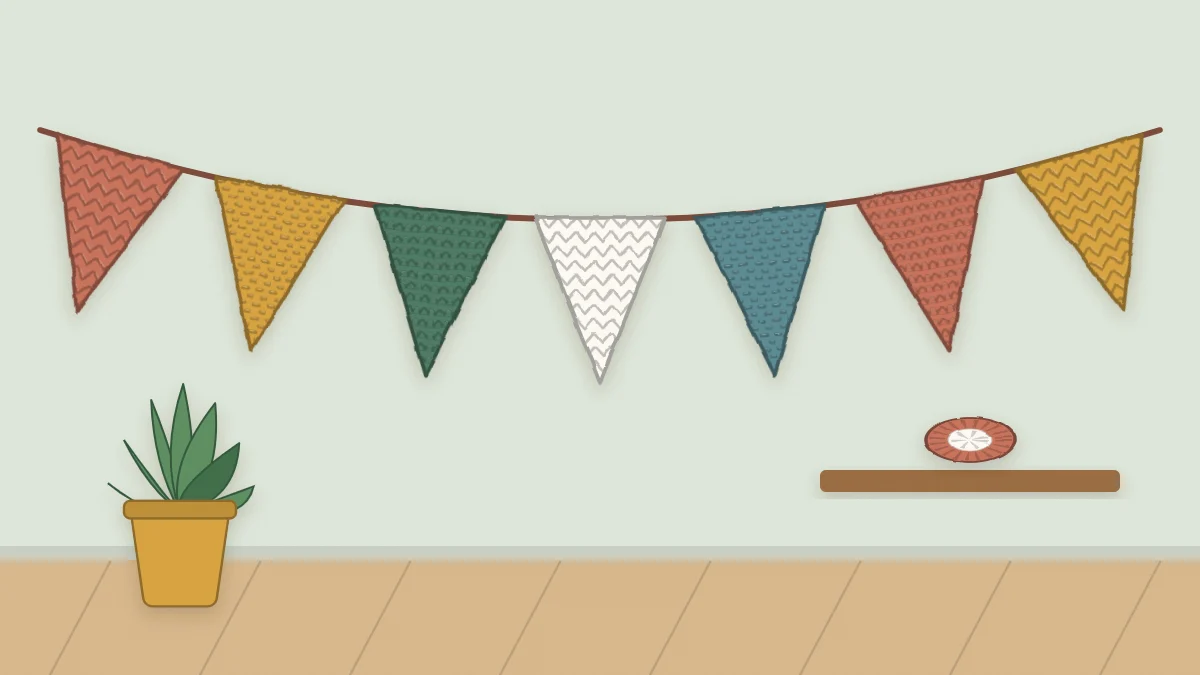
A crochet bunting garland is a string of small triangles that turns a bare shelf edge, window or headboard into something cheerful. Each pennant here starts with two stitches at the point and grows by one stitch per row, so there is no shaping to memorize, and the joining cord is a simple chain.
Yarn, Hook and Notions
- Worsted-weight (#4) cotton or cotton-blend yarn: roughly 8 yards (7.5 m) per pennant
- About 10 yards (9 m) more in the cord color for a 6 ft (1.8 m) garland
- H-8 (5 mm) crochet hook
- Yarn needle, scissors and a few rustproof pins for blocking
Cotton gives crisp edges and blocks flat, which matters for a shape that is meant to hang straight. This is also a good project for leftovers, since each triangle uses so little. If you are mixing several colors, the guide to crochet color palettes for home decor will help you choose a set that looks planned.
Gauge and Pennant Size
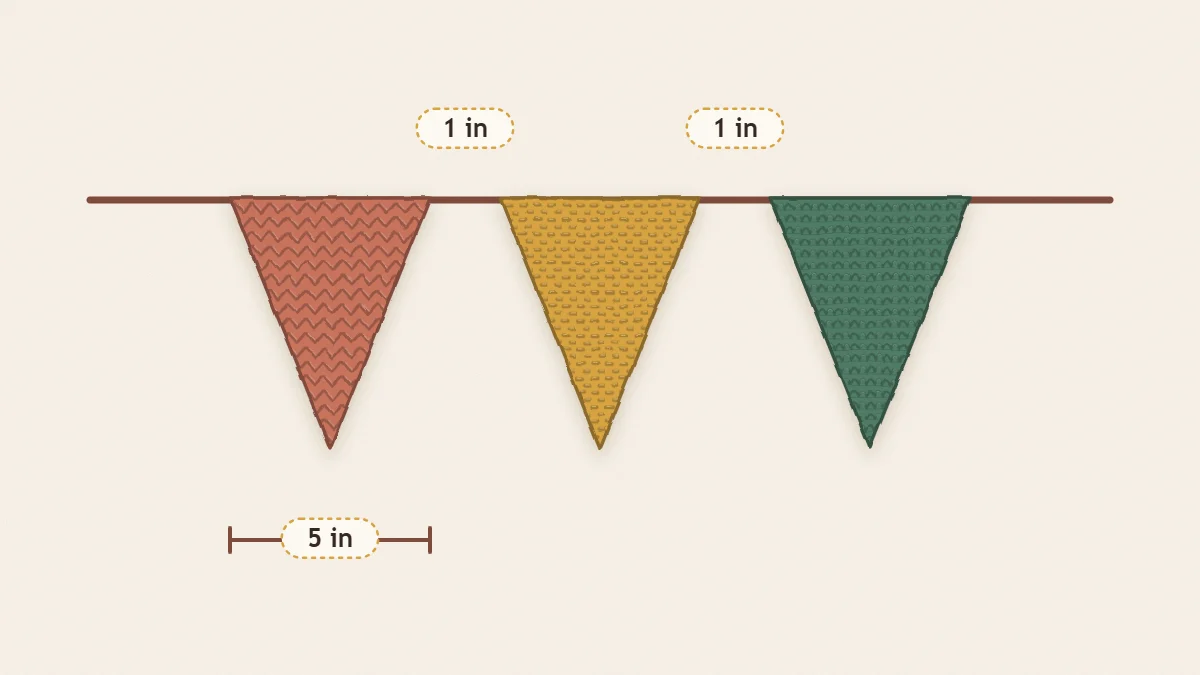
Gauge is 16 sc and 18 rows to 4 in (10 cm). At that gauge each pennant is about 5 in (12.5 cm) wide across the top and 4.25 in (11 cm) from top edge to point. Exact gauge is not critical, but keep your tension the same from pennant to pennant so they match.
Abbreviations (US terms)
- ch: chain
- sc: single crochet
- st/sts: stitch/stitches
- rep: repeat
- RS: right side
Pennant Pattern
Every row begins with an increase. Because you turn after each row, the increases land on alternate edges and the triangle stays symmetrical.
- Row 1: Ch 2. Work 2 sc in the 2nd ch from the hook (2 sc).
- Row 2: Ch 1, turn. 2 sc in the first st, sc in the next st (3 sc).
- Row 3: Ch 1, turn. 2 sc in the first st, sc in each of the next 2 sts (4 sc).
- Rows 4 to 19: Ch 1, turn. 2 sc in the first st, sc in each remaining st across. Each row is one stitch wider than the last: Row 4 has 5 sc, Row 10 has 11 sc, and Row 19 has 20 sc.
- Fasten off and weave in both tails. Mark the side that faces you on Row 19 as the RS.
A quick check as you go: the stitch count is always the row number plus one. If Row 12 does not have 13 stitches, an increase was missed or a turning chain was worked into by mistake.
Tip
Block the pennants before joining them. Dampen each one, pin the three corners so the top edge measures 5 in (12.5 cm), and let it dry. Triangles that have been blocked hang flat instead of curling at the point.
Joining the Pennants on a Chain
The cord is made and the pennants are attached in one pass. Line the pennants up in color order first, all with the RS facing you.
- With the cord color, ch 40. This is the first tie, about 10 in (25 cm) long.
- Sc in each of the 20 sts across the top of the first pennant (20 sc).
- Ch 4 for the gap, then sc in each of the 20 sts across the top of the next pennant.
- Rep step 3 until every pennant is attached. Do not chain after the last pennant.
- Ch 40 for the second tie. Fasten off and knot each tie end so it cannot unravel.
For a sturdier cord on a long garland, turn at the end and slip stitch back along the whole length before fastening off.
How Many Pennants You Need
One pennant plus one gap covers 6 in (15 cm) of cord, so plan on six pennants per yard. A meter is a little longer than a yard: use six pennants with ch-8 gaps, or seven pennants with ch-3 gaps. The lengths below are the decorated span only; the two ties add about 10 in (25 cm) at each end.
| Space to fill | Pennants | Decorated length |
|---|---|---|
| 3 ft shelf or small window | 6 | 35 in (89 cm) |
| 4 ft headboard or doorway | 8 | 47 in (119 cm) |
| 6 ft wall or large window | 12 | 71 in (180 cm) |
| 8 ft wall or bookcase run | 16 | 95 in (241 cm) |
A garland looks best with a gentle dip rather than pulled tight, so measure the space with a piece of string draped the way you want it to hang, then match the pennant count to that length.
Where to Hang It
Bunting suits any straight line that needs softening: the front edge of a shelf, across a window frame, above a bed, along a bookcase or down a stair rail. In a child’s room or a craft corner it adds color without taking up any surface.
Tie the ends to small removable hooks, or loop them around curtain-rod brackets. Longer garlands need a third support in the middle so the dip does not become a sag. The guide on how to hang crochet wall decor covers hooks, heights and spacing in more detail.
Watch out
Keep yarn garlands well away from candles, stovetops and working fireplaces. A mantel is only a safe spot if the fireplace below it is not in use.
Finishing Touches and Variations
Weave in the cord tails through the back of the single crochet stitches, not the chain, where they would show. The steps for hiding ends securely are in the guide to finishing crochet home decor.
- Stripes: change color every four or five rows for banded pennants.
- Smaller flags: stop at Row 13 (14 sc) for pennants about 3.5 in (9 cm) wide, and work 14 sc across each top when joining.
- Seasonal sets: swap colors through the year, and at the holidays hang it alongside a few crochet Christmas ornaments.
Frequently asked questions
Why are my triangle pennants lopsided?
A lopsided triangle usually means an increase was skipped on one edge or the turning chain was counted as a stitch. Count each row: the total should be the row number plus one. Blocking with pins at the three corners evens out small differences.
Can I use acrylic yarn for bunting?
Yes. Acrylic is light and comes in many colors, so it works well for a garland that only has to hang. It does not hold a wet block as well as cotton, so the points may curl a little more unless you steam them carefully or stiffen them lightly.
How do I store a garland so it does not tangle?
Wind it around a piece of cardboard, laying the pennants flat as you go, and tuck the ties under the last wrap. Stored flat in a drawer or box, it will come out ready to hang without re-blocking.